Claude for Marketing: 2026 Guide with 50 Prompts
How to use Claude for digital marketing: the mental model, 50 prompts I use with clients organized by task, real cases and the mistakes to avoid.
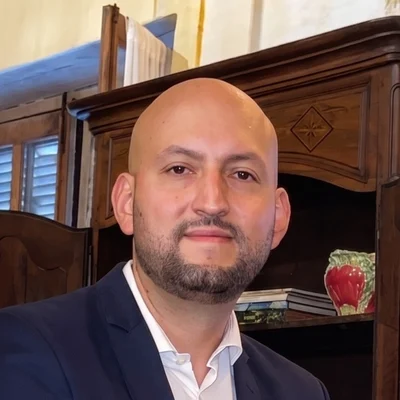
AI, digital marketing and medical marketing consultant · btodigital
If you’re reading this, you’ve probably already heard of Claude. Maybe you tried it a couple of times, were impressed, and then went back to your usual tools without really knowing how to integrate it into your day-to-day marketing work.
This guide solves that.
I’m Carlos Betancur Gálvez. I’ve been doing digital marketing for 20+ years and, since Anthropic launched Claude, I’ve turned it into the “co-pilot” of practically everything we do at btodigital. From strategy to copywriting, from data analysis to customer service. I’ve built WhatsApp agents that scale service operations, RAG systems that answer using a client’s knowledge base, and automation flows that cut 60–80% of the time spent on repetitive tasks.
Here you’ll get, with no reservations, what I’ve learned: the mental model, the 50 prompts I use most, and the costly mistakes I’ve already made so you don’t have to.
The 50 prompts in this guide, by task
Every prompt is written to copy, paste and replace the fields in square brackets. This table takes you straight to the one you need.
Strategy and planning
| # | What it’s for | What it returns |
|---|---|---|
| 1 | Competitive audit | Comparison matrix, 3 exploitable gaps and 1 counterintuitive move |
| 2 | Actionable buyer persona | Unspoken frustrations, purchase fear and the real objection |
| 3 | 90-day editorial calendar | Weekly table with keyword, intent and internal links |
| 4 | Map of what to give up | Where NOT to compete and which segment to stop chasing |
| 5 | Price review | Whether you are expensive or cheap and how to raise prices without losing volume |
| 6 | Channel post-mortem | Why it isn’t working and what signal says to shut it down |
SEO and organic content
| # | What it’s for | What it returns |
|---|---|---|
| 7 | Keyword expansion | Search families in conversational language |
| 8 | Full SEO brief | Structure, length and angles before writing |
| 9 | Article audit | What is missing and what is excess in a published piece |
| 10 | Intent classification | Which format wins for each search and which to discard |
| 11 | Detect cannibalization | Which of your pages compete with each other and what to do |
| 12 | Restructure for AI search engines | Questions, self-contained answers, a table and FAQ |
| 13 | Internal linking plan | Where to link from, with what anchor and why |
| 14 | Rewrite titles | 5 alternatives with CTR in mind |
Copywriting
| # | What it’s for | What it returns |
|---|---|---|
| 15 | Meta ads with variants | Several angles to test in the same campaign |
| 16 | Google Search ads | Headlines and descriptions within the limits |
| 17 | 5-email series | Sequence with subject line and goal for each send |
| 18 | Landing page structure | Section order and what goes in each one |
| 19 | Short video script | 3 scripts that work without sound |
| 20 | Sales FAQ | 10 questions, uncomfortable ones included |
| 21 | Cart or quote recovery | 3 messages without a forced discount |
| 22 | Value proposition | 8 lines of 12 words or fewer |
| 23 | One piece, five formats | LinkedIn, video, email, WhatsApp and thread |
| 24 | Ruthless editor | What to cut, what you can’t prove and a 70% version |
Data and measurement
| # | What it’s for | What it returns |
|---|---|---|
| 25 | Reading GA4 | Interpretation, not a description of metrics |
| 26 | Google Ads audit | Where budget goes without return |
| 27 | Monthly report to leadership | Executive summary without jargon |
| 28 | Where the funnel leaks | The leak in absolute numbers and what fixing it is worth |
| 29 | Reconciling platforms | Why numbers don’t match and which to treat as official |
| 30 | Does this A/B test prove anything? | Whether there is evidence or not enough volume |
| 31 | Customer value by source | Which channel brings the most valuable customers, not the cheapest |
| 32 | Allocating budget | A justified split and the signal to correct it |
Customer service and reviews
| # | What it’s for | What it returns |
|---|---|---|
| 33 | Negative review response | Publishable text that doesn’t make things worse |
| 34 | Differentiated WhatsApp messages | Templates by type of contact |
| 35 | Patterns in the chat | Repeated questions and where the conversation drops |
| 36 | Rules for an automated assistant | Instructions, including when to hand off to a person |
| 37 | Batch of review responses | Replies that don’t read like a template |
Social media and video
| # | What it’s for | What it returns |
|---|---|---|
| 38 | A month of content | 12 posts with a required mix of types |
| 39 | Clone your tone | A description of your voice and a piece written with it |
| 40 | Clips from a talk | 8 fragments that stand on their own |
| 41 | Comment replies | Classified, with what to answer and what to ignore |
| 42 | LinkedIn post without fluff | 200 words with worn-out formulas banned |
| 43 | Pitching a journalist | A 120-word email to a reporter |
Research and product
| # | What it’s for | What it returns |
|---|---|---|
| 44 | Patterns in interviews | Verbatim quotes, trigger and real objection |
| 45 | Kill the idea before spending | The most fragile assumption and a cheap test to check it |
| 46 | Read a competitor between the lines | What they leave out and the gap it leaves you |
| 47 | Extract what’s actionable from a document | What changes a decision, with the page |
Day-to-day work
| # | What it’s for | What it returns |
|---|---|---|
| 48 | Agenda for a difficult meeting | Order, hard questions and where you could lose it |
| 49 | One-page report | Five blocks and banned words |
| 50 | Document a process | A followable procedure and what nobody documented |
Why Claude (and not ChatGPT or another AI)?
I’m not going to start a model war. They each have a place. But for marketing specifically, Claude has three advantages that matter:
- Sustained reasoning: Claude maintains coherence across long conversations better than any model I’ve tested. If you work with complex briefs, this is gold.
- Natural tone: when it writes in Spanish or English, it doesn’t feel “translated.” The copy it produces reads human. That matters when output goes in front of clients.
- Responsible alignment: Claude is built by Anthropic with an explicit safety focus. For medical, financial or regulated marketing, this is critical. Claude will refuse to invent medical data or guarantee impossible outcomes, and that protects you legally.
That said, the tool doesn’t make the master. A bad prompt to Claude gives worse results than a good prompt to GPT-3.5. What follows is how to write prompts that work.
The mental model: three principles before any prompt
Before the 50 prompts, you need to internalize three principles. Without them, the prompts won’t deliver.
1. Claude knows nothing about your client: you do
This is the most common trap. You ask Claude “make a Facebook ad for my dental clinic” and it gives you something generic that fits any dentist on the planet. That’s not Claude failing, it’s you not giving it context.
A productive prompt has at minimum four layers:
- Who the client is (profile, age, city, income)
- What problem hurts them
- What you’ve tried before that worked or didn’t
- What restriction/regulation applies
Below you’ll see how this translates into concrete prompts.
2. Iterate, don’t expect a miracle on first try
A lot of people ask Claude something, don’t like the output, and say “this AI is useless.” What actually happened is you didn’t give feedback. Claude responds extraordinarily well to iteration:
“This is close, but the tone is too formal. Make it warmer, like talking to a friend. Keep the data but cut the jargon.”
That second iteration usually closes 80% of the gap. The third leaves it at a publishable level.
3. Verify the data. Always.
Claude can be wrong about figures, dates and citations. Especially if you ask for specific data without giving it a source. Golden rule: if a number is going in front of a client, prospect or publication, review it manually. Claude is excellent at synthesizing, terrible at memorizing exact facts.
1. Strategy and planning
This is where Claude shines. It turns scattered ideas into coherent plans and helps you see what you’re missing.
1.1 Deep competitive analysis
When a new client comes in, the first thing is mapping what the competition does. Claude can search the web, but for a competitive analysis it does far better when you give it the data yourself (ads, prices, copied pages), so it doesn’t settle for the first thing it finds.
Act as a senior marketing consultant with 15 years in [INDUSTRY].
Below is information on 3 direct competitors of my client in [CITY/COUNTRY]:
[paste URLs, service descriptions, value propositions].

My client is [DESCRIPTION] and their problem is [PROBLEM].

Return:
1. A comparison matrix with: positioning, strengths, weaknesses, gaps.
2. 3 strategic gaps my client can exploit TODAY.
3. 1 counterintuitive move no competitor is making.

Be brutal and specific. Don't tell me "they should improve SEO." Tell me exactly what.
This prompt changed how we onboard. What used to take 4 hours in a spreadsheet now comes out in 20 minutes with better quality.
1.2 Buyer personas that actually serve
Prompt #2: actionable buyer persona
Build a detailed buyer persona for [PRODUCT/SERVICE] in [COUNTRY].

I already know the basic demographics: [age, gender, income].

What I want is what NEVER appears in templates:
- The 3 frustrations they tell NO ONE
- The fear that paralyzes them at the moment of buying
- The exact phrase they would use searching on Google
- The 2 trade-offs they're willing to accept
- The real objection (not the one they say out loud)

Close with: "The most profitable insight about this buyer is..."
1.3 90-day editorial roadmap
Prompt #3: SEO + funnel-aligned editorial calendar
Generate a 90-day editorial calendar for my client [DESCRIPTION].

Constraints:
- 2 pieces per week (1 pillar of 2000 words, 1 short of 800)
- Each pillar must answer a keyword with monthly searches > 500 in [COUNTRY]
- 40% TOFU (educational), 40% MOFU (consideration), 20% BOFU (decision)
- Each piece must have 3 internal link opportunities to another piece in the calendar

Return a table with: week, title, primary keyword, search intent, funnel stage,
and 3 suggested internal links.
1.4 Deciding where NOT to compete
Prompt #4: map of what to give up
We are [BUSINESS DESCRIPTION] in [COUNTRY]. Here is our current offer,
our real resources and our 3 main competitors: [PASTE].

I don't want to know where we can grow. I want the opposite:

1. The 3 battles we should NOT fight and why we would lose them.
2. The customer segment we should stop chasing, with the argument
   in numbers.
3. A service or product line we should probably kill.

Justify each one with the specific resource we lack. If you think we
shouldn't give up anything, say so and explain why.
1.5 Price and positioning
We sell [PRODUCT/SERVICE] at [PRICE] in [COUNTRY]. Our direct cost
is [COST] and the average customer buys [FREQUENCY] over [TIME].
Competitors charge: [PASTE RANGE].

I want:
1. Whether we are expensive, cheap or in the right place, and against what benchmark.
2. Three ways to raise the price without losing volume, ordered by risk.
3. What we would have to change in the offer to justify 20% more.
4. The exact objection that will come up when we raise it, and how to answer it.

No "it depends on perceived value". I want concrete moves.
1.6 Diagnosing a channel that isn’t working
Prompt #6: channel post-mortem
We have spent [TIME] investing in [CHANNEL] with these results: [PASTE DATA].
The goal was [GOAL].

Act as a skeptical consultant and answer:
1. Is the channel the problem, or is it what we are asking of it?
2. Three hypotheses for why it isn't working, ordered by probability.
3. For each hypothesis, how I would test it in under two weeks.
4. The concrete signal that would tell me "shut this down and move on".

If nothing can be concluded from this data, tell me and say what is missing.
2. SEO and organic content
Here Claude replaces tools that cost thousands of dollars a year, if you know how to ask.
2.1 Conversational keyword research
My main keyword is "[KEYWORD]". I want to attack it for [COUNTRY].

Give me:
1. 20 long-tail keywords with clear commercial intent
2. 15 long-tail keywords with informational intent
3. 10 question-based keywords (starting with how, what, when, why)
4. 5 low-competition keywords a small competitor can win in 3 months

For each keyword, indicate search intent in 1 word.
2.2 Content brief that drives traffic
I'm going to write an article on "[TOPIC]" targeting the keyword "[KEYWORD]".

Build the brief with:
- Title tag (60 characters) optimized for CTR
- Meta description (155 characters) with clear value proposition
- H1 (not identical to title)
- H2 / H3 structure (minimum 8 sections)
- Word count target based on typical SERP
- 5 semantically related entities to include
- 3 "People Also Ask" questions to answer
- 1 section no competitor is covering

Then give me the first paragraph in a warm but authoritative tone.
2.3 On-page optimization of an existing article
Below is an article. Audit it under these criteria:

[PASTE THE FULL ARTICLE]

Return:
1. Current title vs proposed (more clickable)
2. Current meta description vs proposed
3. Estimated keyword density and whether it's right or stuffed
4. 5 H2s missing per search intent
5. 3 internal links that should be added and exactly where
6. The weak section that's burying the ranking

Be direct. Don't congratulate me.
2.4 Search intent before writing
Prompt #10: intent classification
Here is a list of searches: [PASTE LIST].

For each one, return a table with:
- Real intent (informational, comparative, transactional or brand)
- Which format wins in the results today for that intent
- What the first sentence of the content should be
- Whether it is worth it for a business that sells [WHAT YOU SELL], yes or no

Be strict with the last column. I'd rather you discard half of them.
2.5 Cannibalization between your own pages
Prompt #11: detect cannibalization
Here is a Search Console export with page, query, impressions,
clicks and position: [PASTE].

Find the cases where two or more of MY pages compete for the same
query. For each case tell me:
1. Which pages compete and for which query
2. Which one should keep the topic, with the argument
3. What to do with the other: merge, refocus or redirect
4. Roughly what I gain if I fix it

Order by impact. Ignore trivial cases.
2.6 Turning an article into a citable answer
Prompt #12: restructure for AI search engines
Here is an article of mine: [PASTE TEXT].

Restructure it so an answer engine can cite it:
1. Turn each heading into the question people actually ask
2. Open each section with a complete 40- to 60-word answer
   that makes sense without reading the rest
3. Propose a table wherever there is something to compare
4. Write 6 FAQs with self-contained answers
5. Point out where a first-party data point that only I can provide is missing

Don't make the text longer. If something is excess, cut it.
2.7 Internal linking with judgment
Prompt #13: internal linking plan
Here is the list of my articles with title, URL and main topic:
[PASTE]. The page I want to rank is [TARGET URL].

Return a table with:
- Which article to link from
- With what exact anchor text (varied, not always the same)
- Where in the article it fits naturally
- Why that link helps the reader, not just the search engine

Maximum 8 links. If one feels forced, don't propose it.
2.8 Title and description with CTR in mind
This page is in position [POSITION] with [IMPRESSIONS] impressions and
a CTR of [CTR]. Its current title is: [TITLE]. Its description: [DESCRIPTION].
The queries that bring it traffic are: [PASTE].

Give me 5 alternative titles of 60 characters or fewer that:
- contain the main query without sounding robotic
- promise something concrete and verifiable
- don't use "ultimate guide", "everything you need to know" or "in 2026"

For each one, say what kind of reader it attracts and which one you would discard.
3. Copy that converts
This is probably the area where you’ll save the most time. But heads up: Claude copy without human editing = mediocre copy. Always edit.
3.1 Meta and Google ads
Prompt #15: meta ads with variants
Product: [DESCRIPTION]
Audience: [SPECIFIC PROFILE]
Offer: [WHAT YOU OFFER]
Platform restrictions: Meta Ads (no absolute claims, no sensitive targeting)
Tone: [specify the tone]

Give me 5 Facebook/Instagram ads with this structure:
- Hook (line 1): max 7 words, must stop the scroll
- Body (3-4 lines): connect pain to solution
- CTA: specific, not "more info"

Variants to test across the 5:
A. Curiosity
B. FOMO
C. Social proof
D. Counterintuitive
E. Specific-numeric (with real number)
3.2 Google Search ads
I'm creating a responsive search ad for "[KEYWORD]".

Give me:
- 15 headlines (30 chars each) hitting different triggers
- 4 descriptions (90 chars each) covering benefit, social proof, urgency,
  and differentiator

Restrictions: no superlatives banned by Google. Each headline must be able
to stand alone (because of dynamic rotation).
3.3 Email that gets opened
Prompt #17: email marketing 5-email series
List: [DESCRIPTION OF LEADS: how they came in, what they downloaded]
Product to sell: [WHAT]
Current entry point: they downloaded my [LEAD MAGNET]

Design a 5-email sequence (day 0, 2, 4, 7, 10):
1. Welcome + lead magnet delivery + set expectation
2. Success case (the most impressive)
3. Pure educational (resolve the most common fear)
4. Soft offer (show product, no pressure)
5. Closed offer with real scarcity (not fake)

Per email: subject, preheader, body (300-400 words max), single CTA.
3.4 High-conversion landing page
Product: [DESCRIPTION]
Traffic arriving: [WHERE FROM: Google Ads, organic, social...]
Main promise: [WHAT YOU PROMISE]

Structure a landing in this order:
1. H1 (clear, benefit + transformation)
2. Sub-H1 (specific, what you get)
3. Visible CTA above the fold
4. 3 pain points your prospect is feeling NOW
5. How you solve it (3 pillars)
6. 3 real testimonials (leave placeholders where they go)
7. Handling the 5 most common objections in FAQ format
8. Final CTA with micro-promise (e.g., "no commitment")

Tone: [TONE]. Total length: 600-800 words.
3.5 Video ads
Prompt #19: short video ad script
Product: [WHAT]. Audience: [WHO]. Problem it solves: [PROBLEM].
Target length: [15/30/60] seconds.

Write 3 scripts with a second-by-second structure. Rules:
- The first 3 seconds must work WITHOUT sound
- No "Has this ever happened to you...?"
- One message per script, not three
- Close with a concrete action, not "learn more"

For each script, state what is shown on screen and what is said, separately.
3.6 An FAQ page that sells
We sell [PRODUCT/SERVICE] to [AUDIENCE] in [COUNTRY] for [PRICE].
These are the objections we hear in sales: [PASTE].

Write 10 FAQs that:
- use the customer's words, not ours
- include the 3 uncomfortable questions we'd rather not answer
- answer head-on, without sales hedging
- can be read on their own, out of context

Mark which ones belong on the sales page and which in the blog.
3.7 Recovery messages
Prompt #21: abandoned cart or quote sequence
Context: [STORE OR SERVICE]. The customer [WHAT THEY DID AND HOW FAR THEY GOT].
Average ticket: [VALUE]. Channel: [EMAIL/WHATSAPP].

Write 3 messages spaced over [TIMEFRAME]. Conditions:
- The first does NOT sell, it only makes it easy to pick up again
- The second resolves the most likely doubt, without a discount
- The third may include an incentive, and tell me which one you'd recommend
- None can sound automated or use a fake countdown

Include the subject line or first line, which is the only thing people see.
3.8 Value proposition in one line
Prompt #22: sharpen the value proposition
This is what we do: [LONG DESCRIPTION]. Our ideal customer is
[WHO] and what they value most is [WHAT]. We stand out because [WHAT].

Write 8 versions of a one-line headline for the home page.
Rules:
- 12 words maximum
- Within 5 seconds it must be clear what we sell and to whom
- Banned: transform, empower, end-to-end solutions, strategic partner,
  take your business to the next level

Then tell me which one you would choose and why the other 7 are worse.
3.9 Adapting one piece to several channels
Prompt #23: one piece, five formats
Here is an article of mine: [PASTE]. My tone is [DESCRIBE OR PASTE EXAMPLE].

Turn it into:
1. A 150-word LinkedIn post with a single argument
2. A 30-second vertical video script
3. A 120-word email with one link
4. Three standalone messages for a WhatsApp group
5. A thread of 5 short posts

Don't repeat the same idea five times. Each format should attack a different
angle of the same topic.
3.10 Review before publishing
Act as a demanding editor. Here is a text of mine: [PASTE].

Give me back:
1. The sentences that are excess, marked for deletion
2. Every claim that should have a source and doesn't
3. The places where I say something generic anyone could say
4. The promises I can't prove
5. A version cut to 70% of its length

Don't praise anything. Just mark what is wrong.
4. Data analysis and interpretation
Here Claude is the perfect replacement for the junior analyst you don’t have budget to hire.
4.1 Reading GA4
Below are Google Analytics 4 metrics for the last 30 days vs the prior 30:

[Paste data: users, sessions, conversions, bounce rate, top pages, top sources]

I need:
1. 3 important findings that would slip past a quick glance
2. The most likely hypothesis explaining the main change
3. 3 concrete actions to take this week
4. The metric I should STOP looking at because it's vanity

Don't congratulate me on anything. Tell me what's broken and why.
4.2 Google Ads campaign audit
Below is my Google Ads account report:

[Paste: campaigns, ad groups, keywords with CTR, CPC, conversion, cost,
top 20 search terms]

Return:
1. The 3 keywords wasting most budget
2. The 5 critical negative keywords that are missing
3. The ad group with worst Quality Score and why
4. The change with the most impact if I could only do one

Pretend the client is sitting across the table and needs an answer today.
4.3 Automatic executive summary
Prompt #27: monthly CEO report
Summarize the month's marketing performance in "report-for-CEO" format:

Data: [PASTE NUMBERS]

Rules:
- Max 1 page
- Only 3 important KPIs (not 15)
- The good, the bad, the next
- Zero jargon (no CTR, ROAS, CAC without explanation)
- Close with ONE question the CEO should answer to make the next decision
4.4 Conversion diagnosis
Prompt #28: where the funnel leaks
Here is my funnel data: [VISITS, STEPS, CONVERSIONS PER STEP].
The goal is [ACTION].

I want:
1. Where the biggest leak is in absolute terms, not percentages
2. What fixing each step would be worth, in conversions gained
3. The 3 most likely hypotheses for why it drops there
4. What I should check first, without tools, in one afternoon

If the volume isn't enough to conclude anything, say so instead of interpreting noise.
4.5 Attribution when the numbers don’t match
Prompt #29: reconcile platforms
Meta reports [X] conversions, Google Ads reports [Y], my analytics [Z] and
my sales system records [W] actual sales in the same period.

Explain:
1. Why they don't match, one cause for each gap
2. Which of the four figures I should treat as official and why
3. How to split credit between channels in a defensible way
4. What to stop trying to reconcile because it will never match

A practical answer, not a treatise on attribution models.
4.6 Reading an A/B test
Prompt #30: does this test prove anything?
A/B test: variant A had [VISITS] visits and [CONVERSIONS] conversions.
Variant B had [VISITS] and [CONVERSIONS]. It ran for [DAYS] days.

Answer in this order:
1. Is there enough evidence to declare a winner? Yes or no, first.
2. If not, how many more visits are needed and how long that is
3. If yes, which one wins and with what margin of uncertainty
4. What mistake I would be making if I act on this data

Don't give me a winner if the numbers don't support it.
4.7 Cohorts and customer value
Prompt #31: customer value by source
Here are my customers with first purchase date, source channel and
later purchases: [PASTE].

I want to know:
1. Which channel brings the customers worth the most over time, not the cheapest
2. How much I can pay for a customer from each channel without losing money
3. Whether there is a channel that looks good on cost and is bad on retention
4. What data I'm missing to make this analysis solid

Give me the number, not the methodology.
4.8 Next quarter’s budget
Prompt #32: allocate the budget
Total budget: [AMOUNT] for [PERIOD]. Results from the previous period
by channel: [PASTE SPEND AND RESULT FOR EACH]. Goal: [TARGET].

Propose a split and justify it with the data. Include:
1. How much goes to each channel and why
2. What percentage to keep for testing new things
3. The channel you would cut and the argument to defend that cut
4. The signal that would make me change the split midway

If the goal isn't reachable with that budget, say so up front.
5. Customer service and reviews
5.1 Negative review response
Prompt #33: negative review response
A client left this 1-star Google review:

"[PASTE REVIEW]"

Context: [explain what really happened, no sugarcoating]

Write a public response that:
- Acknowledges what really happened (without admitting things that didn't)
- Doesn't reveal patient/client information
- Demonstrates how much we care to the READER of the review (not the writer)
- Closes with a direct channel to resolve

Max 80 words. Tone: professional, empathetic, not defensive.
5.2 WhatsApp templates for lead nurturing
Prompt #34: differentiated WhatsApp messages
I produce WhatsApp messages for 3 funnel moments:

A. Cold lead who downloaded a lead magnet 24h ago
B. Warm lead who asked for a quote but didn't reply in 3 days
C. Existing client to up-sell

Per case:
- Initial message (max 4 lines, zero "Hi good morning hope you're well...")
- Open question that invites reply
- Exit if no reply after 48h (single message, no insisting more)

Tone: warm but professional. Like a consultant who respects the other person's time.
5.3 Analyzing sales conversations
Prompt #35: patterns in the chat
Here are [NUMBER] anonymized WhatsApp conversations from our sales team:
[PASTE].

Find:
1. The 5 most repeated questions, in the customer's exact words
2. The point in the conversation where most people stop replying
3. What the top-closing rep does differently
4. Three of our replies that are probably scaring customers away

Quote specific fragments as evidence for each point.
5.4 Rules for an automated assistant
Prompt #36: write the bot’s rules
I want an assistant that handles [CHANNEL] for [BUSINESS]. It must be able to:
[LIST OF TASKS]. It must never: [LIST OF PROHIBITIONS].

Write the system instructions. They must include:
1. What it does when it doesn't know something (hint: don't make it up)
2. The exact signals that force it to hand the conversation to a person
3. How it responds to a complaint or an upset person
4. What information it must NEVER ask for or repeat
5. The tone, with two examples of good replies and two of bad ones

Make it actionable, not a manifesto.
If you’d rather not build and maintain the assistant yourself, Atendio is our ready-made platform of AI WhatsApp assistants.
5.5 Review responses in volume
Prompt #37: batch of review responses
Here are [NUMBER] reviews of our business: [PASTE].

Write a public reply for each one. Rules:
- 50 words maximum
- They must not look like they came from the same template
- For negative ones: acknowledge, don't justify, and offer a private channel
- For positive ones: thank without sounding automated, and without asking for anything
- Never promise something we don't control

Mark which ones are better NOT answered in public and why.
6. Social media and video
This is where the risk of sounding generic is highest, so the prompts are loaded with constraints.
6.1 Social content calendar
Prompt #38: a month of content with judgment
Business: [DESCRIPTION]. Audience: [WHO]. Main network: [WHICH].
What already worked: [PASTE 3 EXAMPLES]. What failed: [PASTE 2].

Build 12 posts for one month. For each one:
- The angle, in one sentence
- Why this audience would care
- Recommended format and why
- The exact first line

Required mix: 6 that teach something, 3 that show how we work,
2 that tell a mistake of ours, 1 that sells. No motivational quotes.
6.2 Writing in your own voice
Here are 5 texts of mine: [PASTE].

First, describe how I write: sentence length, vocabulary,
what I avoid, how I open and close, what verbal tics I have.

Then write [NEW PIECE] in that voice. At the end, point out the three
parts where it was hardest to sound like me and why.
6.3 Repurposing a long video
Here is the transcript of [TALK/PODCAST/WEBINAR]: [PASTE].

Identify 8 moments that work on their own as a short piece. For each one:
- Approximate start and end minute
- Why that fragment stands on its own
- The title or caption I would publish it with
- What kind of viewer it speaks to

Discard the ones that only make sense with prior context.
6.4 Comments and community
Here are the comments on this post: [PASTE]. The brand's tone
is [DESCRIBE].

Classify them as: real question, praise, well-founded criticism, troll and
spam. For the first three categories, write a short reply.
For the other two, tell me whether to reply, ignore or delete, and why.
6.5 LinkedIn posts for B2B
Prompt #42: LinkedIn post without fluff
Topic: [TOPIC]. My concrete experience with it: [PASTE ANECDOTE OR DATA].
Audience: [WHO].

Write a post of 200 words maximum. Banned:
- Opening with a rhetorical question
- The "X years ago I was... Today I am..." structure
- One-line sentences separated by line breaks, one after another
- Ending with "What do you think?"

The first line should say something people can disagree with.
6.6 Press releases and mentions
Prompt #43: pitching a journalist
I want [OUTLET] to cover [TOPIC]. What I have of value is: [FIRST-PARTY DATA,
STUDY OR CASE]. The journalist who covers this is [NAME/SECTION].

Write the outreach email. 120 words maximum. It must:
- Say in the first line why it matters to THEIR audience
- Put the strongest data point in the first 30 words
- Attach nothing and not ask for a meeting
- End with a concrete offer that is easy to accept

No "I hope this email finds you well".
7. Research and product
7.1 Processing customer interviews
Prompt #44: patterns in interviews
Here are the transcripts of [NUMBER] customer interviews: [PASTE].

Give me back:
1. The verbatim phrases repeated most to describe the problem
2. The common trigger: what happened right before they started looking
3. The real objection, which is almost never the one they mention first
4. What they expected versus what they got, compared
5. What NONE of them mentioned that I expected them to

Quote verbatim whenever you can. Don't summarize in your own words.
7.2 Validating an idea before building it
Prompt #45: kill the idea before spending
Idea: [DESCRIPTION]. Target audience: [WHO]. What I think will happen:
[HYPOTHESIS]. What it would cost to build: [TIME AND MONEY].

Act as the team skeptic:
1. The 3 most likely reasons this fails
2. The most fragile assumption it rests on
3. The cheapest, fastest test to check that assumption
4. What result would make me abandon it, defined before starting

If you think the idea is good, also say why you might be wrong.
7.3 Analyzing a competitor through its own copy
Prompt #46: read a competitor between the lines
Here are a competitor's main pages: [PASTE TEXT].

Tell me:
1. Who they are really talking to, not who they say
2. What objection they are trying to neutralize in each section
3. What they DON'T mention, and what that silence suggests
4. Where they promise something they probably can't deliver
5. The gap they leave open for us

Base each point on a specific quote from their text.
7.4 Summarizing a long document
Prompt #47: extract what’s actionable
Here is [REPORT/CONTRACT/STUDY]: [PASTE].

I don't want a summary. I want:
1. The 5 things that change a decision of mine, with the page where they are
2. The numbers I can quote, checked against the text
3. What the document assumes without proving it
4. What it says between the lines without stating it openly

If a figure isn't explicit in the text, don't make it up: say it isn't there.
8. The team’s day-to-day work
8.1 Preparing a meeting
Prompt #48: agenda for a difficult meeting
Meeting with [WHO]. Goal: [WHAT I NEED TO HAPPEN]. Context and
background: [PASTE]. What I'm afraid will happen: [FEAR].

Prepare:
1. An agenda of 4 points maximum, in the order that suits me best
2. The 5 hard questions they may ask me, with my answer
3. The data point I should have at hand for each item
4. What concession I'm willing to make and which I'm not

Also tell me the point where I'm most likely to lose the meeting.
8.2 A monthly report without filler
Here is the month's data: [PASTE]. The reader is [MANAGER/CLIENT/PARTNER] and
what they care about is [WHAT].

Write a one-page report with exactly this structure:
1. What happened, in one sentence
2. The 3 numbers that matter, compared with the previous month
3. What went well and why, with the cause, not the coincidence
4. What went wrong, without softening it
5. What we will change next month

Banned words: synergy, optimize, impactful, leverage.
8.3 Documenting a process that lives in someone’s head
Prompt #50: get the process out of your head
I'm going to describe how we do [PROCESS] in no particular order, as it comes:
[PASTE FREE DESCRIPTION].

Turn it into a procedure someone else can follow without
asking me anything. Include:
1. The steps in order, with who does each one
2. The decisions to be made and the criterion for each
3. What is needed before starting
4. The three most likely mistakes and how to spot them
5. The questions you would have to ask me because I didn't answer them

Point 5 is the most important: that's where everything nobody ever documented lives.
9. Advanced use cases (where Claude becomes a real game-changer)
This separates those who use Claude as “prettier ChatGPT” from those who turn it into a real competitive advantage.
9.1 RAG: Claude connected to YOUR knowledge base
RAG (Retrieval-Augmented Generation) means giving Claude access to specific information from your company so it answers using that, not using what it remembers from training.
Real example: a client of ours had 200 documents of medical procedures. We built a system where Claude answers internal staff questions using only those documents. We cut average information lookup time from 12 minutes to 8 seconds.
You don’t need a big technical team. The popular options are:
- Claude with Files API (simplest: upload documents and Claude uses them)
- Vertex AI with embeddings (Google Cloud, better for scale)
- Pinecone + Claude (when you need advanced vector search)
9.2 Agents that take action
An agent is Claude with the ability to do things: not just respond. It can check your calendar, send emails, create tasks in Asana, or post on social media. The piece that enables this is called MCP (Model Context Protocol): an open standard Anthropic created to connect Claude to any external system.
Agents I have put into production with real clients (with Claude or another model, depending on the case):
- Quirurgil: an internal platform built with Claude Code, with CRM, installed base, field service and an AI quoting tool.
- Andercol Premium: agent that classifies products in their catalog and adapts them for each distributor in under 30 seconds.
- Almaluna QA: bot that evaluates the quality of every sales conversation with objective metrics, in batches of 200 conversations every night.
9.3 Forward Deployment: when Claude works for you, not with you
This is the model Anthropic implemented internally and that we’re bringing to clients in Latin America. The idea: instead of an assistant you ask things, the agent takes initiative within a specific domain and only consults you for critical decisions.
Concrete example: an agent that every Monday at 8am reviews all Google Ads campaigns, identifies the 3 most urgent, writes a summary, makes the adjustments that are in the operational manual (obvious pauses, minor bid adjustments), and leaves you to decide only what can’t be automated.
10. Costly mistakes I’ve already made (so you don’t repeat them)
Mistake 1: Pasting sensitive data without thinking
I once pasted (to a non-Claude model) a brief with sensitive client data. Claude has strict privacy policies in its enterprise API, but the consumer version isn’t right for confidential data. Rule: sensitive info only goes to Claude via API with your business account and no training on your data.
Mistake 2: Accepting the first version
If you love the first thing it produces, you didn’t love it, you got surprised. Pass it through two more iterations before publishing. The third version is almost always better than the first, never the reverse.
Mistake 3: Asking for “creativity” without constraints
Saying “be creative” produces worse results than giving specific constraints. Human creativity is the same: constraints are fuel.
Mistake 4: Not verifying dates and figures
Claude can mix data from 2022 with 2024 without warning. For any number or date going in a public piece, verify against the source.
Mistake 5: Using Claude for emotional work
If a client just had a crisis and needs an empathetic call, don’t send them an email “drafted by Claude.” AI is excellent for tasks, terrible for human bonds. Know the difference.
11. When NOT to use Claude
To stay honest with you: there are three situations where Claude isn’t the answer.
- Your business’s real-time data. Claude searches the web, but it doesn’t read your database, CRM or inventory live without an integration (for example, through MCP). For today’s prices, stock or sales, your system is the source.
- Legal or medical decisions. Claude can guide you but doesn’t replace a lawyer or doctor. In regulated marketing (health, finance, legal) your role is to validate.
- When the “what” isn’t clear. If you’re not clear on the goal, Claude won’t give it to you. AI amplifies existing clarity, doesn’t create clarity where it doesn’t exist.
12. The next level: autonomous agents in marketing
What’s coming in the next 12-18 months isn’t prettier chatbots. It’s autonomous agents that operate complete processes.
A Google Ads agent that pauses keywords, adjusts bids and reallocates budget without you touching it daily. An email marketing agent that segments, writes and sends based on individual behavior. An SEO agent that detects opportunities, writes briefs, assigns to writers and measures the result.
This is not science fiction: we’re already implementing this with select clients. But it’s not about “replacing the team”. It’s about your team no longer doing the boring work and concentrating on the strategic, creative and human.
Frequently asked questions
How much does it cost to use Claude for marketing? Claude’s personal account (Pro) is USD 20 a month (USD 17 billed annually) and covers most marketing use cases. For companies with several users, the Team plan is USD 25 per user per month, or USD 20 billed annually (prices from claude.com/pricing, October 2026). If you want your team to start with a method, I offer Claude training for companies. If you’re going to build an agent or RAG, API cost starts at a few dollars/month for light use, scaling with volume.
Does Claude replace my marketing team? No. What it replaces is the most boring and repetitive work of your team. What it amplifies is creativity, strategic thinking and the capacity to execute projects that were previously unthinkable.
How do I start if I’ve never used AI in marketing? Start with one repetitive task you do every week. For example: writing the weekly email to leads. Spend two weeks iterating until Claude does it at the level you want. Then expand. Don’t try to “implement AI” as a monumental project. That’s a great trap that ends in paralysis.
Does Claude work well in English and Spanish? Yes, and much better than most models. Especially in Spanish from Colombia, Mexico and Spain. If you want a specific Latin American tone, give it 3-4 examples of how you write and it will replicate.
Is Claude better than GPT? For marketing, in my experience: yes, on long reasoning tasks and copy with natural tone. OpenAI’s models remain competitive on other fronts. What matters isn’t the model, but what question you ask and how you evaluate the result.
Your next step
If this article resonated but you feel you don’t know where to start, that’s exactly where most of my clients were 2 years ago. The difference between those who capitalize on this wave and those who watch it pass is not technical. It’s decision.
If you want to talk for 30 minutes about how I’d apply this to your specific business, message me on WhatsApp. I’ll tell you honestly if it makes sense, and if not, I’ll tell you what does.
To go deeper, download my free Digital Marketing book for free or read the rest of the blog: there are 75+ articles on AI, marketing and digital strategy.
And if you want to see these ideas applied to WhatsApp, take a look at Atendio, our AI WhatsApp assistant platform.
Carlos
Want to apply this to your business?Message me and we will go over it together.
Message me on WhatsApp