Digital marketing trends for 2026: the seven that matter
The seven trends I am already running into on real projects, what each means in practice, and which ones you can safely ignore this year.

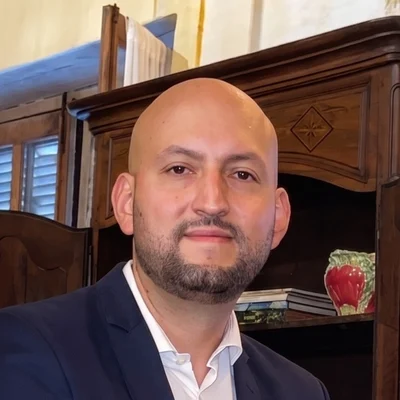
AI, digital marketing and medical marketing consultant · btodigital
The trend that will most change your work in 2026 is not a new tool: it is that searching stopped meaning going to Google. Everything else on this list is either a consequence of that or lives alongside it.
The seven below are not predictions. They are things I am already running into on client projects this year.
What are they, and how urgent?
| # | Trend | How urgent |
|---|---|---|
| 1 | Generative AI as infrastructure, not experiment | High |
| 2 | Autonomous agents in marketing | Medium |
| 3 | Search is no longer only Google | Very high |
| 4 | WhatsApp as the de facto CRM in Latin America | High |
| 5 | Medical marketing: specialise or become irrelevant | High if it is your sector |
| 6 | The end of volume SEO | High |
| 7 | First-party data as competitive advantage | Medium, rising |
If you can only handle two this year, make them 3 and 6.
What does “search is no longer only Google” mean?
That a growing share of queries resolve on screen without anyone visiting your site.
I have it measured in my own data: one conversational English query recorded 403 impressions at position 1.3 with zero clicks over 90 days. At the same time, 12 of my 126 leads this year arrived tagged from ChatGPT, with no media spend.
Both sides are real: you lose clicks and you gain a new channel. What changes is that the prize is no longer the visit, it is being the brand the answer names.
And the autonomous agents?
More mature than it looks operationally, less mature than it is sold strategically.
What works today: handling the repetitive, qualifying leads, scheduling, summarising calls, answering frequent questions. What does not yet: negotiating, handling a complaint, closing a sale where there is doubt.
What surprises people: in a WhatsApp agent the model is almost never the expensive part. The cost is design and maintenance, which is why a ready-made platform like Atendio is usually the fastest path.
Why is volume SEO finished?
Because publishing fifty generic articles no longer ranks anything, and it used to half-work. What remains is authority on a specific topic and content that answers complete questions.
In practice: fewer pieces, better structured, with a figure of your own that does not exist elsewhere. And preferring to update what already has impressions over writing new.
What can I ignore this year?
Comfortably:
- The metaverse and everything attached to it. It did not happen and will not in 2026.
- Jumping to every new social platform. If your customer is not there, it does not matter.
- Buying the most expensive subscription of the trending tool before you have content to rank.
- Chasing a Lighthouse 100. It is not what Google uses to rank.
Frequently asked questions
What is the most important digital marketing trend in 2026? That searching stopped meaning going to Google. Many queries now resolve on screen through generated answers, so the prize moved from the click to being the brand the answer names.
Will AI replace marketing teams? It replaces the repetitive part. It does not replace strategy, judgement or knowledge of the client’s business. Teams that use it well produce considerably more in the same time.
How much does it cost to run an AI agent in production? In a WhatsApp agent you pay for design and maintenance, not the model. For most businesses, Atendio handles that without building from scratch.
Does SEO still work? Yes, with a different prize. It is no longer about accumulating articles but about holding authority on a topic and answering complete questions with original data.
Which trend can I safely ignore? The metaverse, chasing every new social network, and pursuing lab scores such as a Lighthouse 100.
Does WhatsApp replace the CRM? In practice it is already where the relationship happens in Latin America, but without a system behind it you do not have a channel, you have conversations on somebody’s phone. That is the real risk.
Where do I start if I am behind? By measuring where your current customers come from. Without that, any trend you adopt is a blind bet.